
Wildcatter ’82

A game for charter pilots

Operate a small spacecraft beyond reliable infrastructure.

Fly. Land. Trade. Salvage. Survey.
Carry people. Get home.

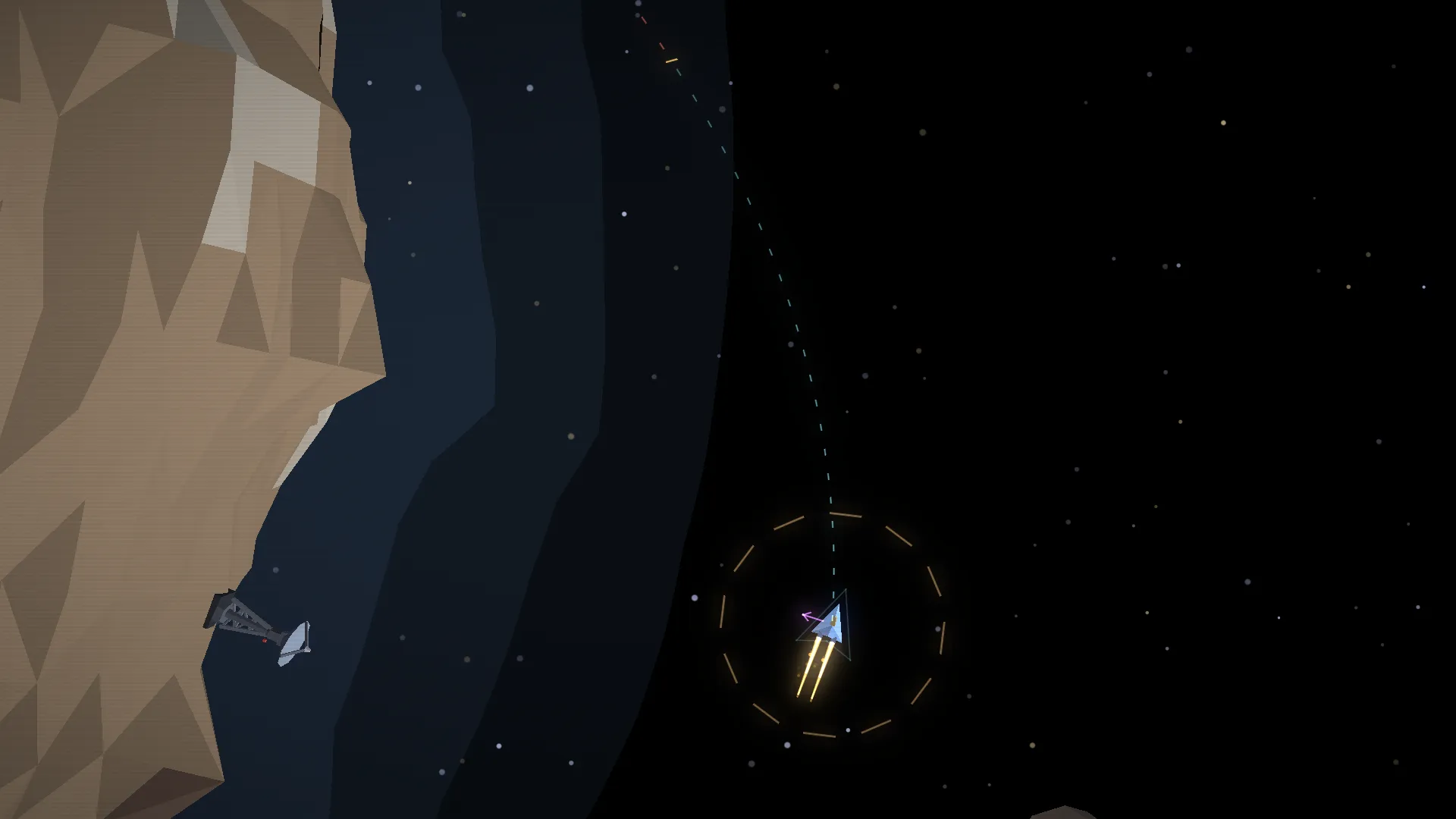
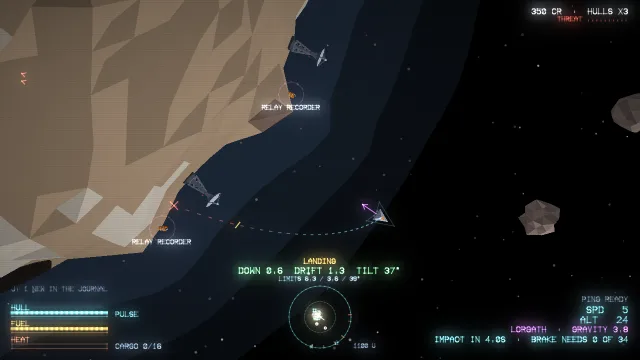
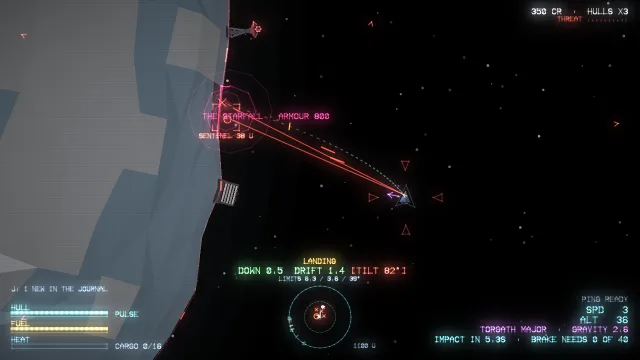
The Kestrel, low over a worldStill from the game

Charter Pilot Service / Sheet 1

Charter Pilot Service

Wildcatter ’82 is an open-ended spacefaring game about operating a small spacecraft rather than merely flying one.

Every world has gravity. Cargo has mass. Fuel, heat and momentum matter. Land badly and the ship remembers. Pull wreckage from caves, ferry passengers, trade between settlements, survey unknown ground, salvage what others left behind and decide for yourself what is worth the risk.

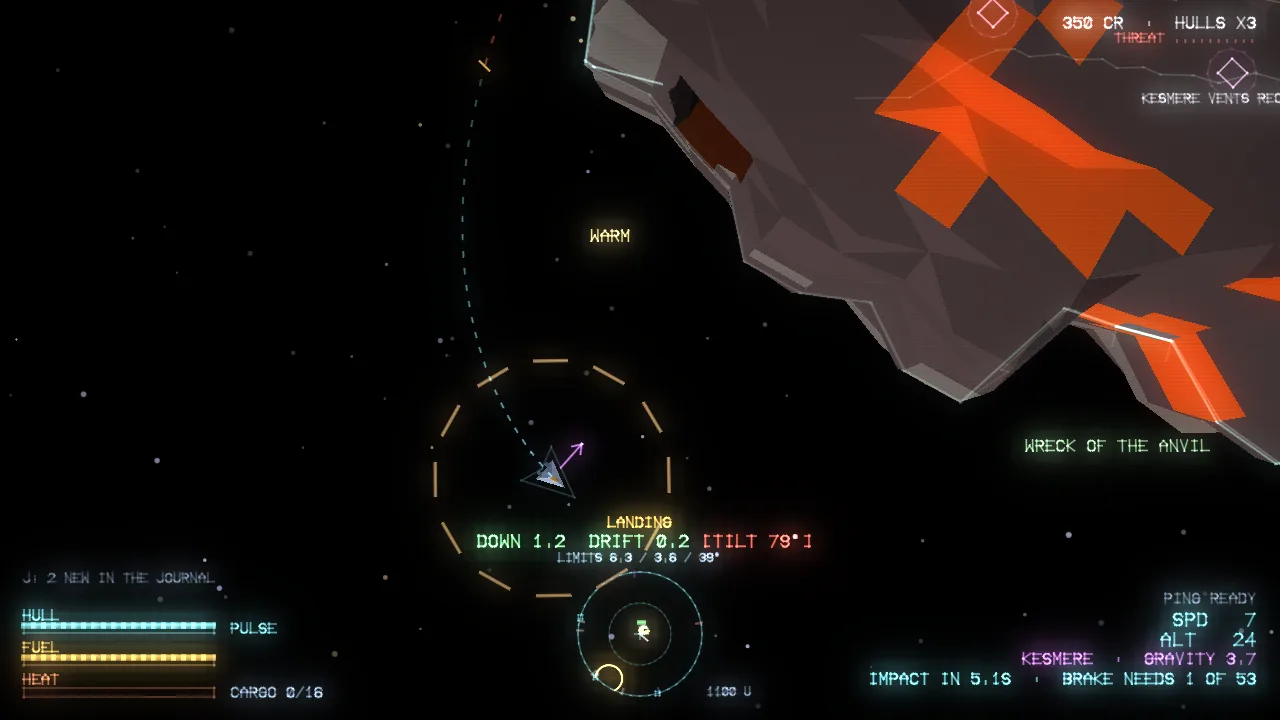
The Kestrel hovering above a rocky world, a survey ping labelling a wreck and a warm patch.
Fig. 1 A survey ping over a world.
Fly
Newtonian movement, gravity, planetary descent, atmospheric heat, fuel and physical landings.
Work
Trade, salvage, surveying, passengers, contracts, recovery and frontier infrastructure.
Return
Expeditions change as you go. Places remember what happened. People and factions react. The work only pays if you get it home.

Charter Pilot Service Film 3

The Kestrel

Film 3. The Kestrel. Running time to be confirmed.

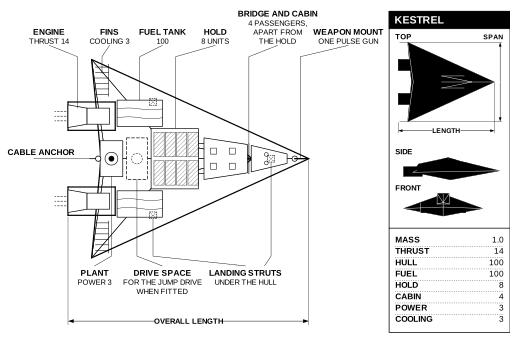
Technical drawing of the Kestrel in plan, with labelled parts and a data table.
Kestrel, general arrangement. From the Flight Manual.

The work pays.
It pays those who return.

Operating principles / Sheet 2

Operating principles

  1. Every world pulls.

    Gravity is not decoration. It governs approach, descent, escape, cargo handling and survival.

  2. Cargo has mass.

    What you carry changes how the Kestrel flies.

  3. Nothing is just scenery.

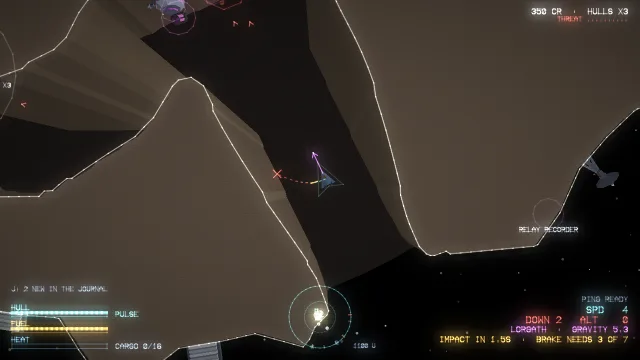
    Cores power machinery. Cables move wreckage. Settlements use goods. Caves contain systems, not treasure rooms.

  4. The world does not wait for you.

    Trade shifts. Factions move. Places change whether you are there or not.

  5. There is no prescribed solution.

    Understand the system. Decide what matters. Improvise.

Plates 1 to 8

Field records

Pilot’s checklist / Sheet 3

What you can do

  1. Fly manually through gravity wells and planetary approaches
  2. Land anywhere terrain permits
  3. Trade between settlements and markets
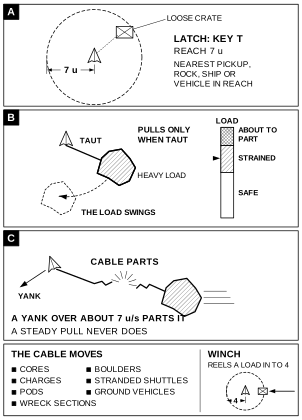
  4. Tow cargo, cores, wreckage and machinery with the ship’s cable
  5. Explore caves and subterranean installations
  6. Recover salvage and black boxes
  7. Survey planets and cave systems
  8. Transport passengers and specialists
  9. Use ground vehicles and rover access where the ship cannot go
  10. Establish frontier claims
  11. Deal with pirates, Tide activity and changing local conditions
  12. Follow contracts or ignore them entirely
  13. Reach one of four endings, then begin future runs from less predictable systems
Field manual

The cover of the Wildcatter’s Flight Manual.
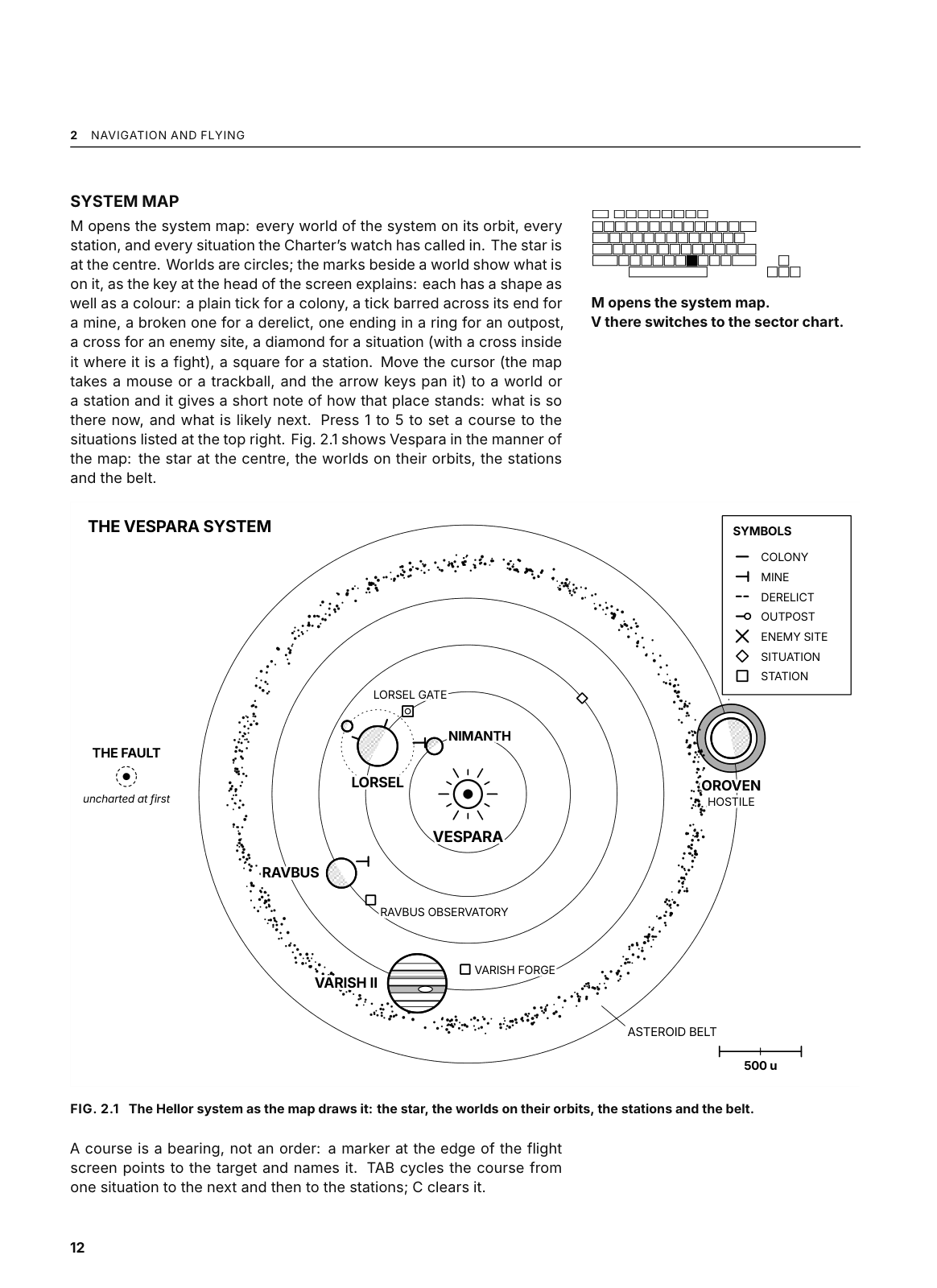
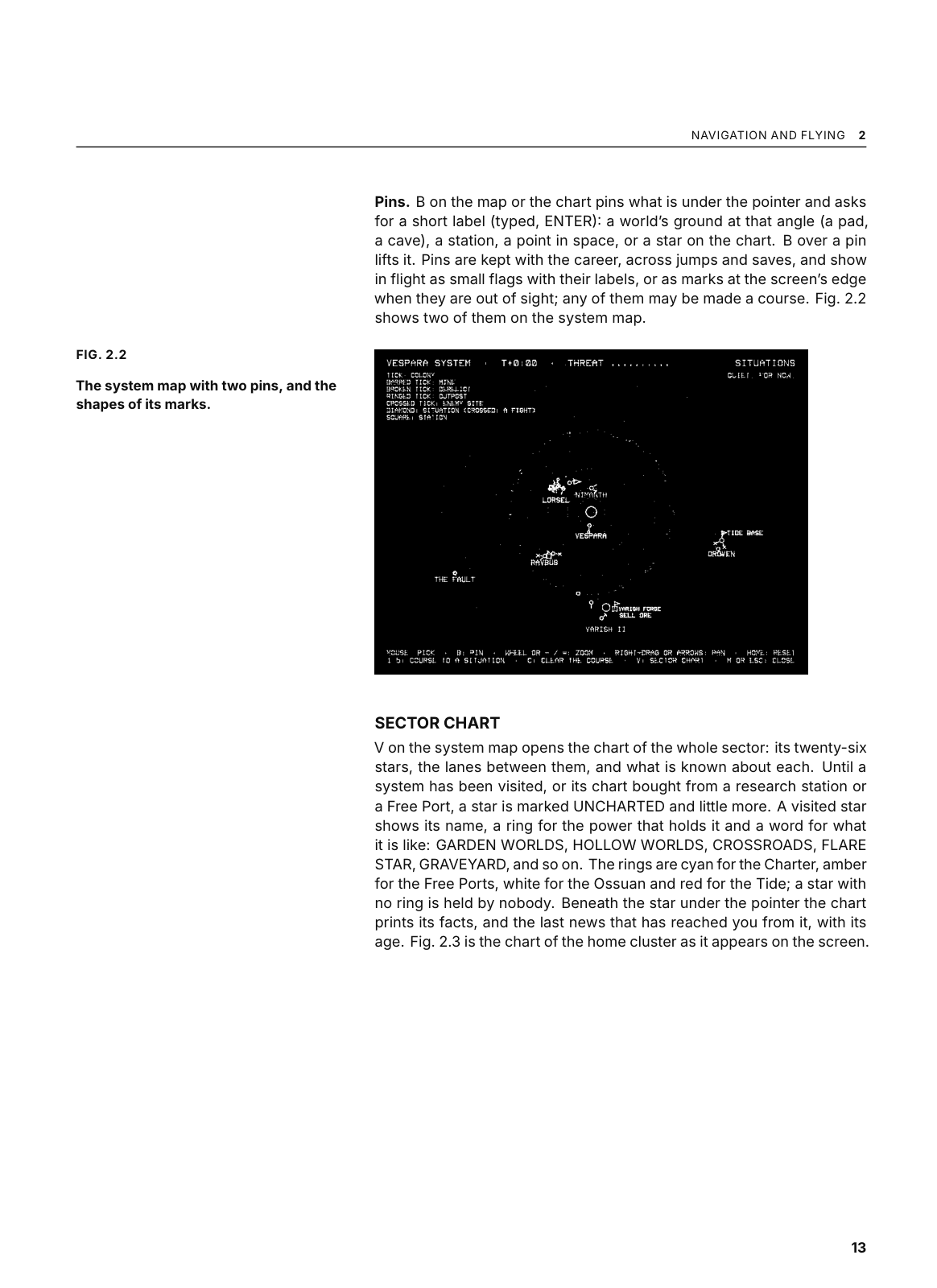
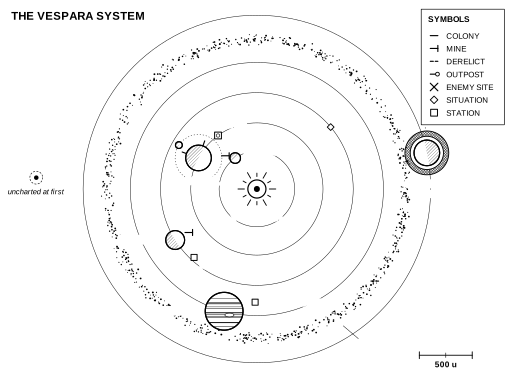
Manual page 12: the system map, with a key to its symbols. Manual page 13: the system map, continued.
Pages 12–13. Navigation and flying.

A full period-style manual is included with the game and can be opened in-game. Flip through it as if you pulled the book from beside the terminal.

Display systems

Built for whatever monitor survived procurement.

  • Clean
  • Scanlines
  • Arcade
  • Green
  • Amber
  • White
  • Blue
  • Composite
  • RF
  • CGA

Aircraft data / Sheet 4

The Kestrel

The Kestrel is not a fighter with cargo space bolted on. It is a working spacecraft.

It carries freight, passengers, survey equipment, salvage, rover hardware and whatever else you can physically drag home.

You will learn its mass, limits, handling and bad habits.

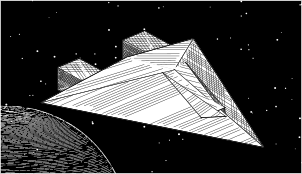
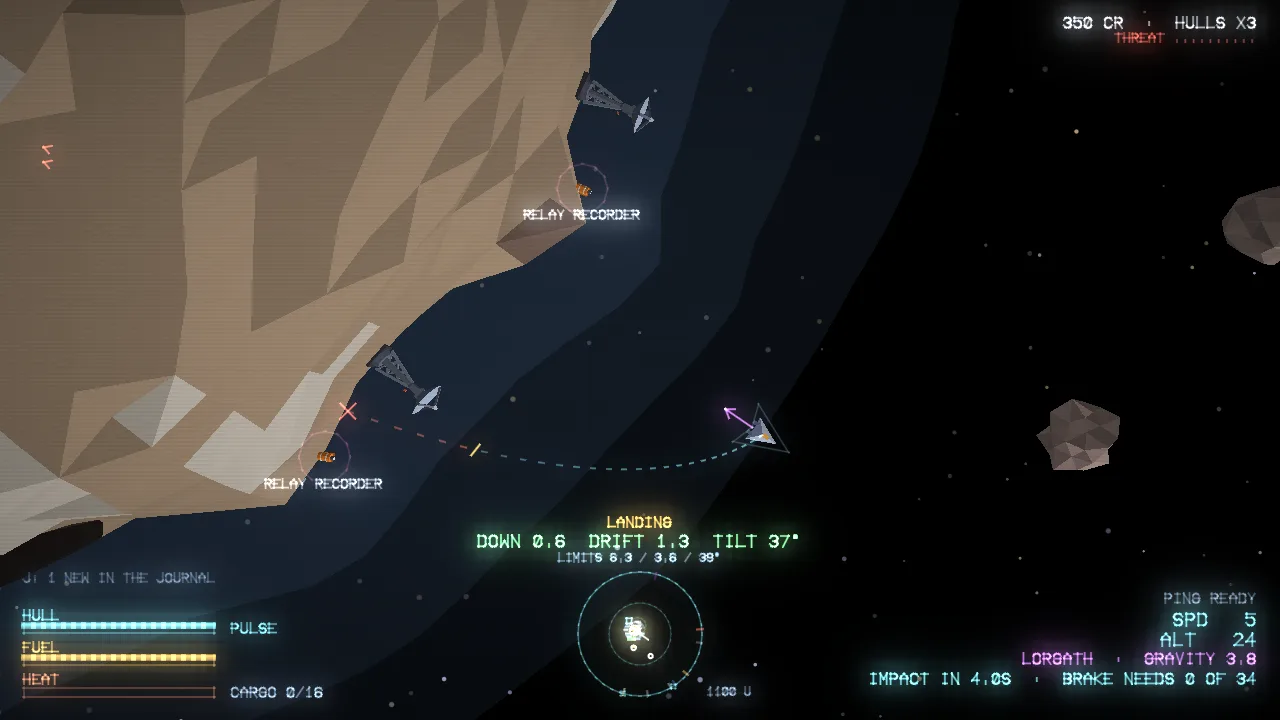
The Kestrel seen from above and to one side, a faceted wedge against a planet.
Fig. 4.1 The Kestrel, in flight.
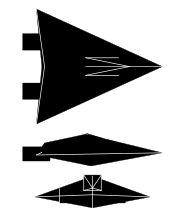
The Kestrel in three views: plan, side elevation and front.
Fig. 4.2 Plan, side and front.

About Wildcatter ’82

Wildcatter ’82 draws from Elite, Frontier, Gravitar, Oids, Asteroids and the strange severity of early computer games that expected players to learn how a machine worked.

It is interested less in making space easy than in making it understandable.